Residue from previous cargo in an inadequately cleaned tank can react with or contaminate the next chemical, leading to product loss, safety incidents, and rejection at destination.
Hazardous goods require precise documentation: MSDS, dangerous goods declarations, and UN number accuracy. A single discrepancy causes port holds, demurrage, and regulatory action.
Hazardous cargo is subject to additional screening and customs scrutiny. Without experienced port coordination, delays compound rapidly, especially at high-traffic terminals.
Chemical-grade ISO tanks in good standing, cleaned, inspected, and ready for a specific cargo class are not always easy to source. Shortages disrupt loading schedules.
Choosing the wrong tank for a cargo based on previous loads, lining material, or fitting types creates contamination risk or safety violations before the cargo even moves.
Corrosives, flammables, and toxic liquids move under special T&C requirements. Shippers working with unqualified operators often discover their liability exposure only when something goes wrong.
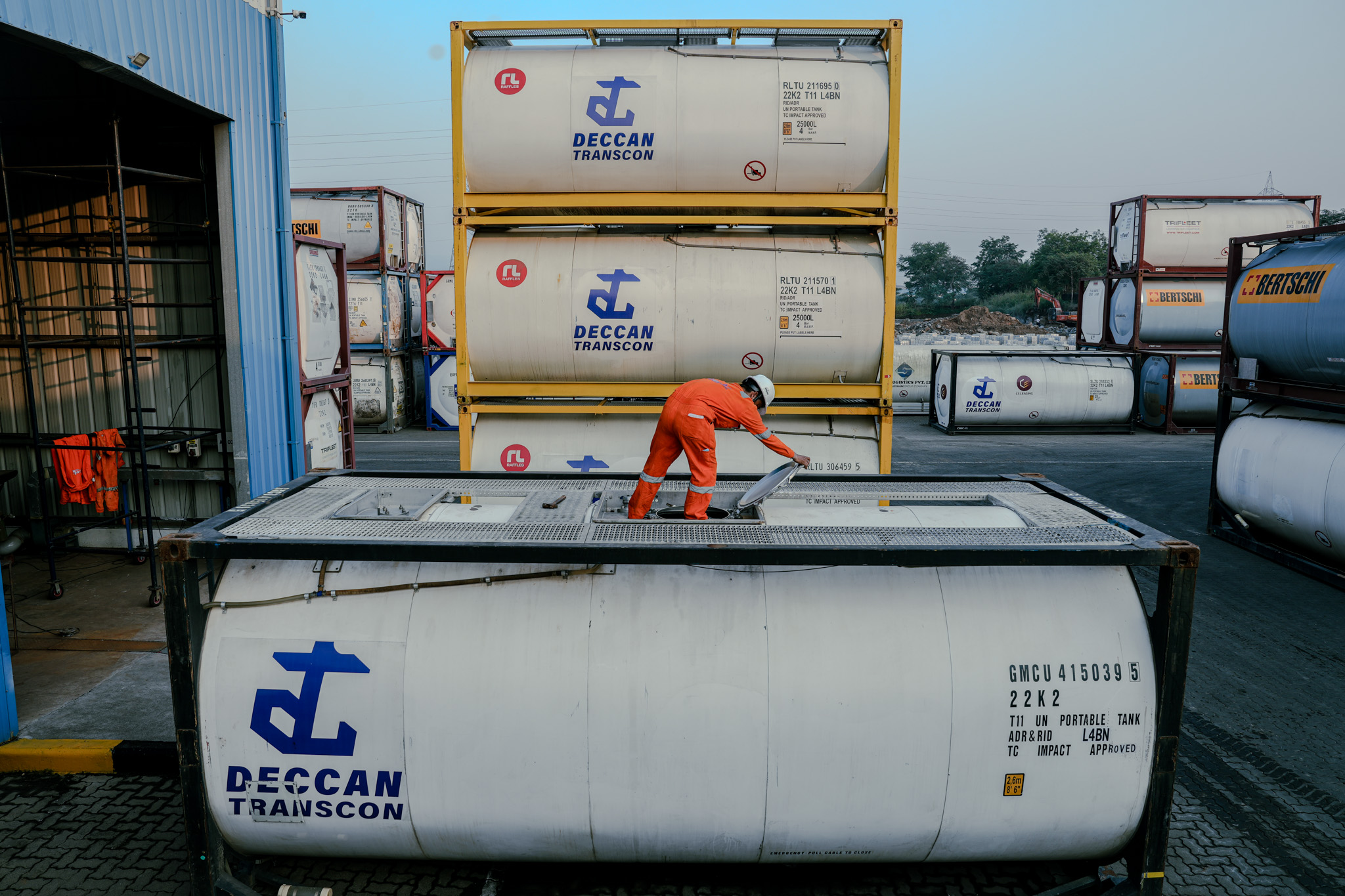
All hazardous chemical transportation is executed in UN-certified ISO tanks, selected based on cargo class, previous load history, and compatibility checks. Tanks undergo certified cleaning between hazardous cargoes, with inspection and cleaning certificates issued on request.
We handle domestic movements within India as well as export consignments. For high-risk chemical classes, dedicated tanks are maintained to prevent cross-contamination entirely.


Chemical cargo rarely moves in a straight line. Deccan Transcon integrates road, rail, and sea legs to optimise cost, minimise transit time, and reduce handling touchpoints, each of which is a risk point for hazardous cargo.
Our port presence across Mumbai, Chennai, and other major terminals enables seamless transitions between transport modes without coordination gaps.
Hazardous goods documentation errors are among the most common causes of delays at Indian ports. Deccan Transcon manages the full documentation set for hazardous and non-hazardous chemical shipments, including dangerous goods declarations, MSDS alignment, UN number accuracy, and customs filing.
For export consignments, our team ensures compliance with both Indian regulatory requirements and the IMDG code applicable to the receiving country.


Chemical cargo comes with extensive paperwork — MSDS, For chemical categories with elevated contamination sensitivity or high-risk profiles, Deccan Transcon maintains dedicated ISO tanks assigned exclusively to those cargo types. This eliminates the cleaning and compatibility risk that comes with tank pooling.
Clients with recurring shipments of specific hazardous chemicals can discuss dedicated allocation arrangements that guarantee tank availability and cargo integrity across every movement.
Before any loading, the tank's previous cargo history is reviewed against the incoming chemical to confirm compatibility and eliminate cross-reaction risk.
Each tank is physically inspected post-cleaning and before loading. Cleaning certificates are issued and available to clients on request.
All hazardous goods paperwork: UN numbers, packing groups, and emergency contact information are reviewed against IMDG requirements before dispatch.
Personnel involved in loading, transporting, and unloading hazardous cargo are trained in handling procedures specific to the chemical classes they work with.
Every movement follows documented SOPs. There is no ad-hoc decision-making on hazardous cargo. Deviations from SOP are flagged and escalated.
Emergency response protocols are in place and communicated to all handling teams before each movement. This covers spill response, evacuation, and authority notification.