


ISO tank logistics has always been a specialist’s business. But over the last few years, that line between ‘specialist’ and ‘generalist’ has started to harden. By 2026, it’s going to be very clear who actually understands bulk liquid movement and who is just renting equipment.
The demand side isn’t the surprise. Chemicals, pharma intermediates, food-grade liquids, volumes keep moving up. What’s changing is how unforgiving the system has become. There’s less slack everywhere. Less tolerance at ports. Less flexibility from shipping lines. Less patience from customers when something goes wrong.
Tank Availability Is Quietly Becoming The Biggest Constraint
People still talk about freight rates and transit times. On the ground, the bigger problem is simpler: getting the right tank, at the right place, at the right time.
Chemical-grade ISO tanks aren’t interchangeable assets. Lining history matters. Cleaning quality matters. Pressure ratings matter. Yet many shippers still assume tanks are a commodity. That assumption is already costing time and money.
By 2026, this gap will widen. New tank manufacturing is not scaling fast enough, and repositioning tanks across regions is expensive and slow. The result is uneven availability, especially for 24-26 KL tanks used for chemicals and sensitive bulk liquids.
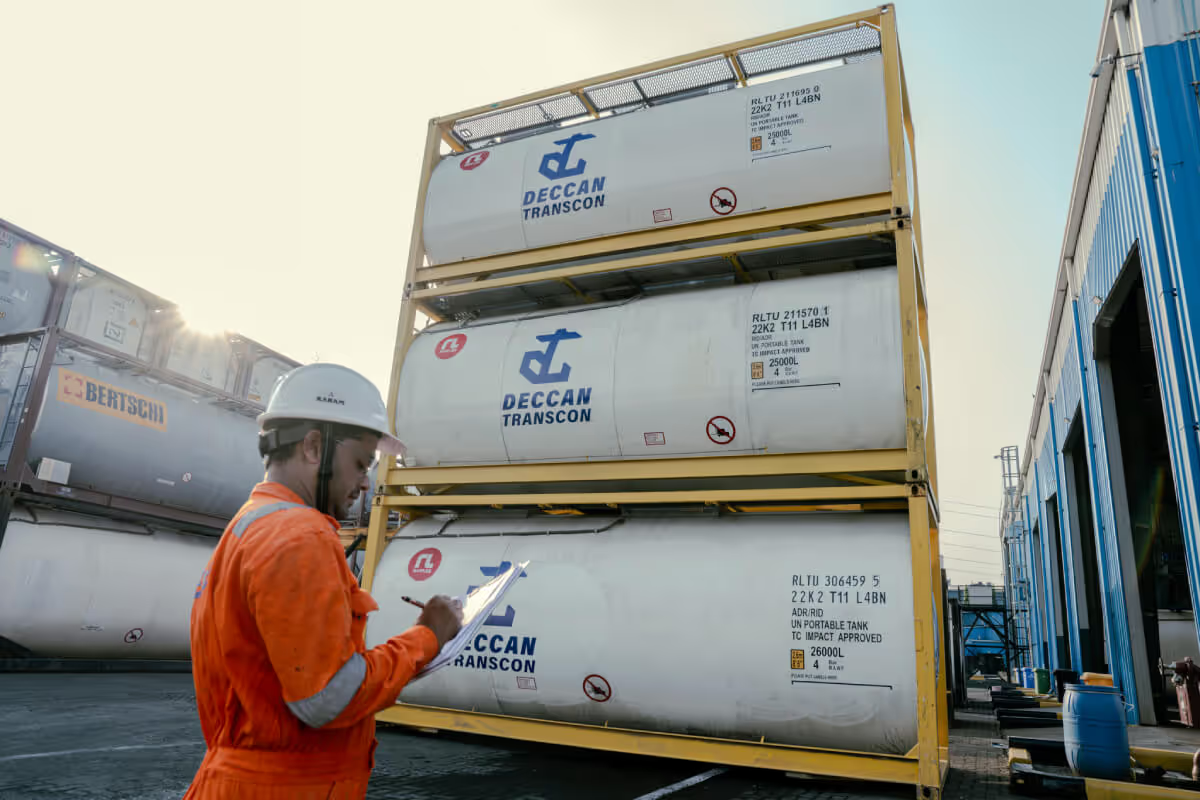
This is why operators who control fleet access, rather than scrambling in the spot market, are becoming more relevant. In India, companies like Deccan Transcon, which have built operations around ISO tank container movement rather than treating it as a side service, are better positioned to manage this pressure.
Compliance Is Moving From Paperwork To Planning
Chemical logistics services have always involved documentation. What’s changed is when compliance failures show up.
Earlier, mistakes could be fixed at the port. Now, a missing inspection record or an incorrect declaration can stop a shipment before it even moves. Shipping lines are stricter. Overseas receivers are stricter. Authorities don’t entertain “we’ll correct it later.”
This is one of the less visible chemical transportation trends, but it’s having a real impact. Compliance has to be built into how tanks are allocated, cleaned, and released.
By 2026, shippers will need partners who understand compliance as an operational process, not an admin task. This is especially true for hazardous chemicals and pharma-linked cargo, where scrutiny is highest.
Safety Expectations Are Becoming Specific, Not Generic
Everyone says ‘safety first.’ That phrase doesn’t mean much anymore.
Customers now ask specific questions. What was the previous cargo? When was the tank last cleaned? What lining does it have? How is pressure managed during transit? What happens if something goes wrong mid-movement?
Safe chemical transport solutions today depend as much on decision-making as on equipment. The tank might meet global standards, but if it’s matched poorly to the cargo, the risk remains.
By 2026, safety conversations will start earlier and go deeper. Shippers who can’t answer these questions confidently will struggle to win repeat business. Those working with experienced ISO tank services in India will find these discussions easier, because the systems are already in place.
India’s Role Is Growing, And So Is Scrutiny
India’s position in global bulk liquid trade is strengthening. Chemical exports, pharma inputs, specialty liquids, all are increasing. At the same time, expectations from international buyers are rising.
Liquid logistics services in India are now compared directly with global benchmarks. There’s less room for informal processes or fragmented execution. Buyers want clarity. One point of accountability. Predictable outcomes.
This is pushing the market toward fewer, more capable players. ISO Tank Services in India are about providing equipment and managing risk, timelines, and compliance together.
Operators who already run integrated chemical logistics services are adapting faster than those trying to retrofit systems onto general freight operations.
The Real Opportunity Lies In Being Boring And Consistent
The future of ISO tank logistics relies on consistency.
By 2026, the winners in bulk liquid logistics solutions will be the companies that do the basics exceptionally well. Tanks that are where they’re supposed to be. Documents that are correct the first time. Cargo that arrives without incident.
This may not sound exciting, but for shippers, it’s everything.
As the system tightens, improvisation becomes expensive. Experience starts to matter more than promises. That’s where established operators like Deccan Transcon, with a long-standing focus on chemical and bulk liquid movement, gain an edge, not through marketing, but through operational depth.
For shippers planning, the question is whether your logistics partner is already operating as that future has arrived.
Source: