


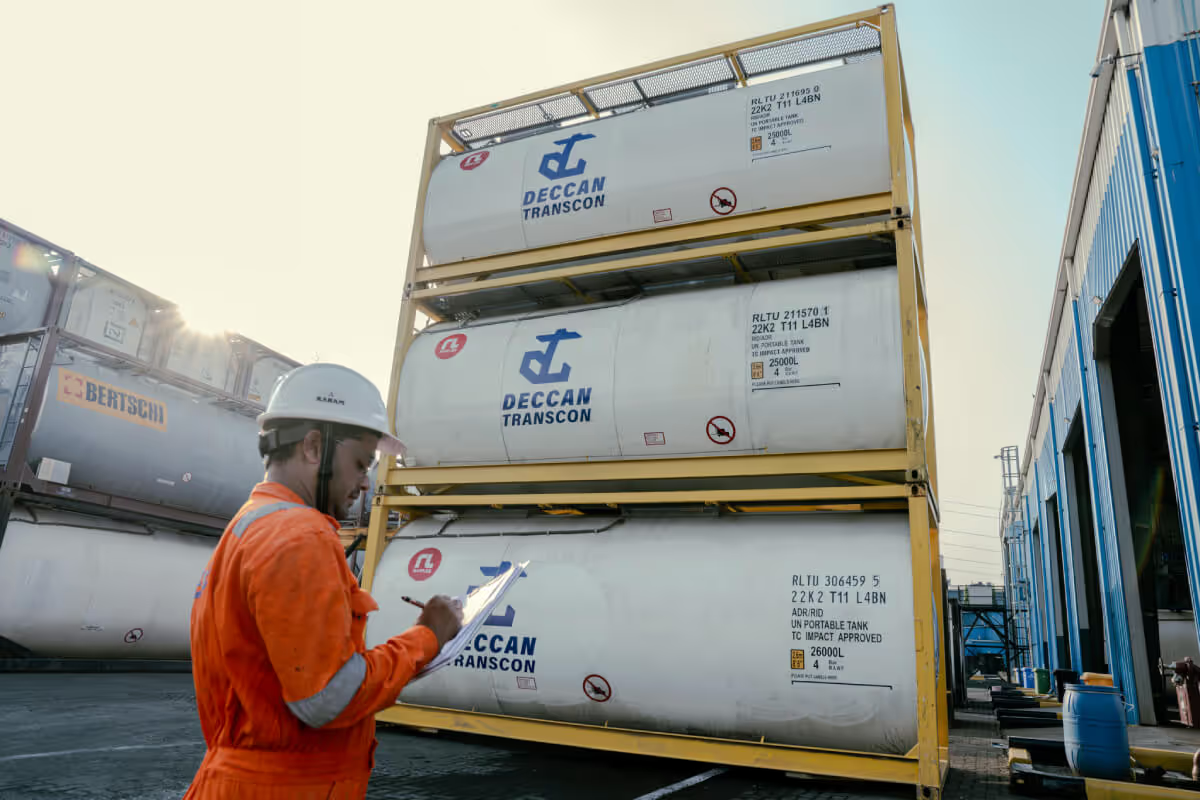
If you've ever had to arrange bulk liquid shipments, you've likely come across tank designations like T11, T14, or T22 and wondered what actually separates them. For procurement and logistics teams, getting the tank type wrong can mean cargo rejections, compliance failures, or, in the worst case, a safety incident.
The global ISO tank container market was valued at approximately USD 0.74 billion in 2022 and continues to grow, driven largely by demand from the chemical and food-grade liquid sectors. With hundreds of operators offering ISO tank services in India and globally, knowing which tank fits your cargo is non-negotiable.
At Deccan Transcon, we work with procurement and logistics teams across industries to simplify this decision. Let’s look at a practical breakdown of the most common types of ISO tanks and how to match them to your shipment requirements.
What Is an ISO Tank Container?
An ISO tank container is a stainless steel pressure vessel built inside a standard ISO frame, typically 20 feet long. Designed for transporting bulk liquids, gases, and powders, these tanks are built to be interoperable across road, rail, and sea transport.
The ‘T-code’ classification system comes from the UN Model Regulations and the IMDG Code. Each code specifies the tank's minimum test pressure, shell material requirements, and what it's permitted to carry. There are T1 through T22 designations, but T11, T14, and T22 are the most widely used in chemical and industrial logistics.
Breaking Down the T-Codes: What Each Letter and Number Means?
Before looking at individual tank types, it helps to understand what the T-code is actually telling you:
- The T stands for ‘tank instruction’
- The number indicates the minimum test pressure and the permitted cargo group
- Higher numbers generally mean higher pressure tolerance and more hazardous cargo categories
Now, let's walk through the three most common types used in liquid chemical transport via ISO tanks.
T11 ISO Tanks: The Workhorse of General Liquid Cargo
Key Specifications
- Minimum test pressure: 4 bar
- Shell: Stainless steel (typically 316L), no lining required
- Capacity: 14,000 to 26,000 litres
- Fittings: Manhole, top and bottom discharge valves, pressure relief valve
What Can T11 Tanks Carry?
T11 tanks are suited to non-hazardous or mildly hazardous liquids. Common cargo includes:
- Food-grade liquids such as edible oils, syrups, and fruit concentrates
- Pharmaceutical-grade solvents and excipients
- Non-corrosive industrial chemicals
- Wine, spirits, and potable water (when tanks meet food-grade cleaning standards)
When to Choose T11?
A T11 is a practical choice when your cargo doesn't require a lined tank and doesn't generate excessive internal pressure. It's widely available, cost-effective to lease or hire, and accepted at most ports globally. For teams handling food or pharma logistics, a well-maintained T11 with documented cleaning records is often the standard specification.
T14 ISO Tanks: Built for Corrosive and Hazardous Chemicals
Key Specifications
- Minimum test pressure: 4 bar
- Shell: Stainless steel with optional rubber or PTFE lining
- Capacity: 14,000 to 26,000 litres
- Fittings: Lined valves, pressure relief devices, anti-surge plates
What Can T14 Tanks Carry?
T14 tanks are designed for substances that would corrode or react with bare stainless steel. Typical cargo comprises:
- Hydrochloric acid and sulphuric acid
- Sodium hypochlorite (bleach)
- Phosphoric acid and other mineral acids
- Certain oxidising agents
When to Choose T14
If your cargo has a UN hazard classification involving corrosives, or if your SDS sheet recommends PTFE or rubber-lined handling equipment, a T14 is the appropriate choice. The lining protects both the tank shell and the cargo from contamination.
One practical point for logistics teams: T14 tanks require more thorough inspection after each use, particularly the lining integrity. Factor that into your turnaround timelines when planning multi-leg shipments.
T22 ISO Tanks: For High-Pressure and High-Risk Chemical Cargo
Key Specifications
- Minimum test pressure: 10 bar
- Shell: Heavy-gauge stainless steel, no lining but higher-spec construction
- Capacity: 14,000 to 26,000 litres
- Fittings: High-pressure valves, safety relief devices, pressure gauges
What Can T22 Tanks Carry?
T22 tanks handle the most demanding cargo categories, including:
- Liquefied gases such as chlorine and ammonia
- Refrigerants (HFCs and HCFCs)
- Certain highly toxic liquid chemicals with a vapour pressure above 175 kPa at 65°C
- Ethylene oxide and similar compounds
When to Choose T22?
T22 tanks are mandatory for any cargo that generates significant internal pressure or falls into the highest IMDG hazard groups. They're not interchangeable with T11 or T14 for these substances. If you're shipping gas-phase or high-vapour-pressure chemicals, your MSDS and applicable ADR/IMDG provisions will specifically call for a T22.
From a procurement standpoint, T22 tanks are less commonly available and carry higher lease costs. Planning availability well in advance is important, especially for time-sensitive chemical shipments.
T11 vs T14 vs T22: Side-by-Side Comparison
How to Identify the Right ISO Tank for Your Cargo?
When evaluating ISO tank specifications for chemicals, here's a practical process to follow:
- Step 1 - Check your UN Number: Every regulated substance has a UN Number. These points refer to the permitted tank instruction (T-code) in the IMDG Code or ADR tables.
- Step 2 - Review your SDS: The Safety Data Sheet lists material compatibility. If the SDS flags reactivity with steel, you'll need a lined T14.
- Step 3 - Confirm vapour pressure: For liquids with a vapour pressure above 175 kPa at 65°C, a T22 is likely required.
- Step 4 - Check destination-country requirements: Some markets have local regulations layered on top of the IMDG Code. Your freight forwarder or ISO tank agency solutions in India provider should be able to confirm compliance.
- Step 5 - Verify tank documentation: Request the tank's periodic test certificate, last cleaning certificate, and inspection date before accepting any container.
Why Tank Selection Matters?
Incorrect tank type selection causes real operational problems. Cargo damage from chemical reactions with the tank shell, port authority rejections, insurance claim disputes, and regulatory penalties are all documented consequences in chemical shipping.
For ISO tank containers for bulk liquids, the cost difference between tank types is relatively small compared to the cost of a rejected shipment or a product quality failure. Getting it right from the start protects both your cargo and your supply chain timelines.
Working with ISO Tank Operators in India
India's chemical export sector has grown significantly over the past decade, and the demand for reliable ISO tank operators in India has grown with it. India's exports of major chemicals and petrochemicals stood at USD 23.8 billion in FY23, with a substantial share moving in bulk liquid form via ISO tank containers in India.
Choosing the right operator means working with a partner who can verify tank history, manage documentation accurately, and troubleshoot compliance issues before they cause delays.
Deccan Transcon provides ISO tank services in India across chemical, food-grade, and industrial cargo categories. Our team helps clients navigate tank selection, verify certifications, and coordinate multi-modal movement so that the right tank reaches the right port at the right time.
Ready to Move Your Bulk Liquid Cargo?
Whether you're shipping non-hazardous food-grade liquids or regulated industrial chemicals, Deccan Transcon can help you identify the right ISO tank container types, verify equipment, and manage the full logistics chain.
Get in touch with our team to discuss your shipment requirements.
FAQS
1. Can a T11 tank be used for corrosive chemicals?
No. T11 tanks are not lined, which means corrosive substances will degrade the stainless steel shell and potentially contaminate the cargo. Corrosive chemicals require a T14 with an appropriate lining material such as rubber or PTFE.
2. What is the difference between T11 and T14 in terms of pressure rating?
Both T11 and T14 have a minimum test pressure of 4 bar. The key difference lies in shell construction. T14 tanks have a lined interior to handle corrosive cargo, while T11 tanks use bare stainless steel. Pressure rating alone doesn't determine which tank you need; cargo compatibility does.
3. Are T22 tanks available for short-term lease in India?
T22 tanks are available through select ISO tank operators in India, but availability is more limited than T11 or T14. For high-pressure chemical shipments, it's advisable to confirm tank availability at least 2 to 4 weeks before your planned shipment date.
4. How to verify that an ISO tank is certified for my cargo?
Request the tank's most recent periodic inspection certificate (valid for five years), the last cleaning certificate, and the tank's plate details showing the T-code and test pressure. A credible ISO tank container provider will have these documents readily available.
5. Does Deccan Transcon handle documentation and compliance for ISO tank shipments?
Yes. Deccan Transcon supports clients across the full documentation process, including tank certification verification, IMDG compliance checks, and coordination with port authorities. Our team is experienced in ISO tank logistics solutions for chemical, food, and industrial cargo across Indian and international ports.
Sources & References:
1.ISO Tank Container Market Size