


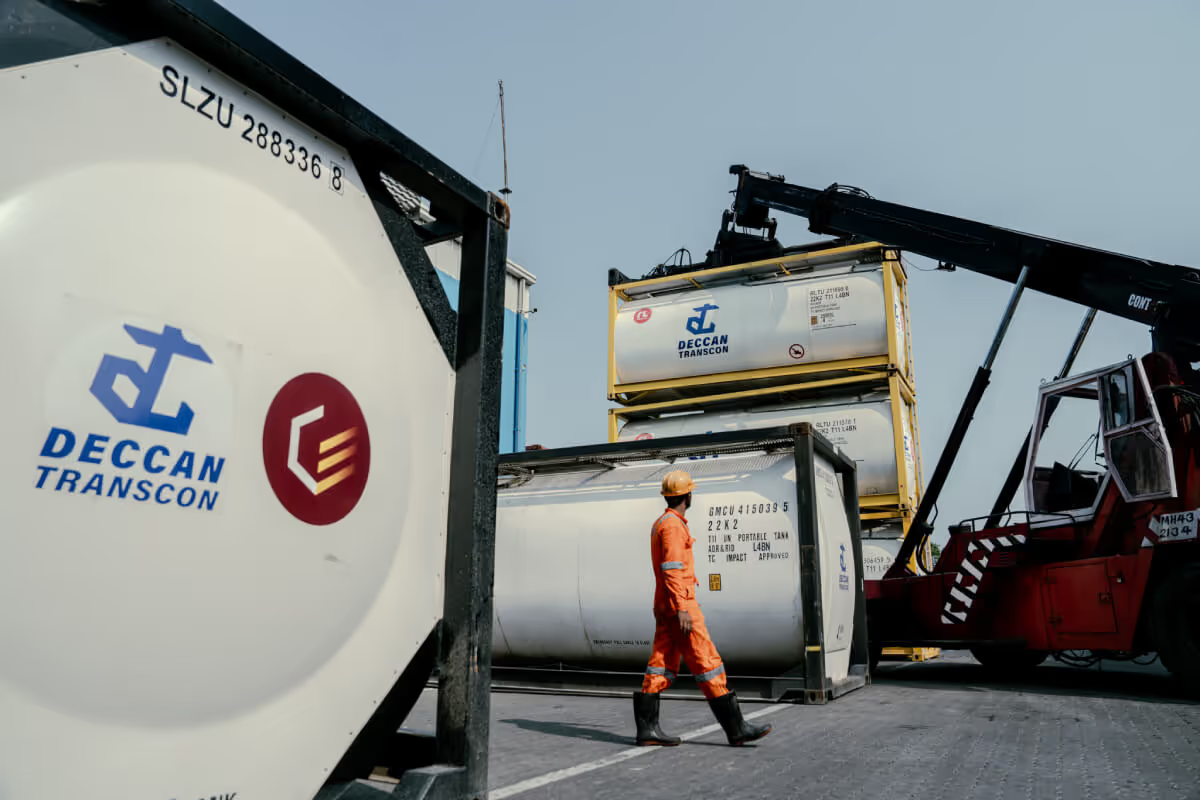
Hyderabad has built a reputation as one of India’s most dependable export centres for bulk liquids. From pharmaceutical intermediates in Patancheru to speciality solvents in Jeedimetla and Bollaram, tank loads move out of the city every week toward Nhava Sheva, Mundra, and Kandla before heading to Europe, the Middle East, and Southeast Asia.
Export teams spend time negotiating freight, aligning production schedules, and managing documentation. Yet one of the most common causes of shipment disruption, rarely discussed in boardrooms, is ISO tank readiness. Tank cleaning and compliance often take a backseat until something goes wrong.
For exporters handling chemicals, solvents, hazardous liquids, or food-grade cargo, understanding ISO tank cleaning in Hyderabad is non-negotiable. It directly influences product integrity, customs clearance, buyer acceptance, and brand credibility.
ISO Tanks as Assets
Unlike drums or flexibags, ISO tanks are long-term assets. They move from one cargo to another, sometimes even across continents. What they carried previously matters as much as what they carry next.
Residue inside a tank is not always visible. Certain chemicals leave thin films on the internal surfaces of stainless steel. Some substances cling stubbornly. Others react aggressively when combined with incompatible cargo. An exporter loading high-purity solvent into a tank that previously transported a corrosive chemical risks contamination, instability, or buyer rejection. The loss in such cases extends beyond freight; it touches credibility.
The chemical ISO tank cleaning process becomes commercially important here.
What Happens During ISO Tank Cleaning?
Cleaning at authorised depots employs:
- Draining and safe disposal of residual cargo
- Chemical neutralisation when required
- High-pressure washing using appropriate cleaning agents
- Steam cleaning for stubborn residues
- Internal drying to eliminate moisture
- Visual and sometimes odour inspection
- Issuance of a cleaning certificate
The cleaning certificate typically records the previous cargo and confirms the tank is fit for reuse. For export cargo, that document often travels alongside shipping paperwork. However, the depth of cleaning depends on the tank’s prior use. Switching between cargo categories, say from hazardous solvent to food-grade liquid, demands a far more stringent approach.
Hyderabad exporters should not assume uniform cleaning standards across depots. Verifying cleaning protocols protects both shipment value and long-term buyer relationships.
ISO Tank Compliance in India: What It Covers
ISO tank compliance is a core part of responsible ISO Tank Services in India, shaped by multiple regulatory and safety requirements. Exporters moving bulk liquids must navigate tank construction standards, inspection validity, and dangerous goods regulations.
A compliant ISO tank typically meets ISO 1496-3 construction requirements and undergoes periodic inspection and hydrostatic testing. Inspection certificates have validity periods. Using a tank with an expired inspection status can delay port clearance. Compliance also intersects with the IMDG Code for sea transport of hazardous cargo. Hazard classification must align with the tank’s pressure rating and design.
Here are four practical checkpoints exporters in Hyderabad should review before loading:
Ports increasingly scrutinise documentation. Shipping lines cross-check cargo declarations against tank specifications. Inconsistencies can stall shipments at the gate.
Integrated logistics providers such as Deccan Transcon address compliance during allocation rather than waiting until dispatch. That early-stage verification reduces operational friction.
Cleaning Capacity in Hyderabad
ISO tank cleaning in Hyderabad depends on licensed depots equipped for chemical waste handling and confined-space safety. These facilities operate within capacity limits.
During peak export months, particularly quarter-end production cycles, cleaning slots fill quickly. Exporters who book tanks without aligning depot cleaning schedules often face last-minute adjustments.
Production teams rarely appreciate hearing that a tank cannot be released because cleaning is delayed.
Planning cleaning alongside freight booking reduces that risk. When cleaning, inspection, and port timelines are synchronised, shipments move with far fewer disruptions. Companies working with structured operators usually benefit from coordinated tank management, where allocation, cleaning, and documentation are handled within one operational flow rather than across disconnected vendors.
Food Grade ISO Tank Cleaning and Compatibility
Food-grade cargo introduces another level of scrutiny. Food-grade ISO tank cleaning demands complete removal of prior chemical traces, use of approved cleaning agents, and odour-neutral internal surfaces. Some overseas buyers request cleaning history records before accepting shipments.
A faint odour or trace contamination can render a food-grade consignment unsellable. Insurance claims in such cases rarely cover reputational damage. Exporters handling edible oils, liquid ingredients, or pharma-sensitive materials should ensure cleaning facilities are qualified for food-grade standards and that documentation reflects that classification. Choosing the lowest cleaning cost option often proves expensive later.
Compatibility assessment is often underestimated. A tank may be technically clean yet unsuitable because of prior cargo chemistry.
Certain acids, amines, and reactive solvents require additional neutralisation steps before safe reuse. Compatibility must be evaluated before allocation. Experienced operators review tank history as part of allocation planning. Deccan Transcon follows compatibility-first allocation protocols, which reduce the likelihood of factory-level rejection during loading. That structured approach protects dispatch timelines and preserves relationships with overseas buyers.
Export Reliability Is a Competitive Advantage
Hyderabad’s export ecosystem has grown fast. Buyers across Europe and Asia increasingly expect consistency and traceability. Tank-related delays signal operational weakness. In competitive markets, buyers remember suppliers who deliver without disruption.
Well-managed ISO tank cleaning and compliance contribute directly towards:
- Predictable vessel loading
- Fewer customs queries
- Lower contamination risk
- Stronger long-term buyer confidence
Exporters focused on scaling volumes cannot afford avoidable operational friction.
To strengthen ISO tank management, exporters can:
- Request tank history before confirming allocation
- Review cleaning certificates prior to factory dispatch
- Align depot cleaning schedules with vessel cut-off dates
- Confirm inspection validity before loading hazardous cargo
- Treat cleaning documentation as part of export risk management
Over time, structured tank oversight reduces emergency calls and production stress.
Partnering with experienced logistics providers such as Deccan Transcon, a logistics services provider in India, can streamline ISO tank cleaning coordination, documentation tracking, and regulatory alignment, especially for exporters moving hazardous or sensitive cargo across international routes.
ISO tanks are engineered for durability and efficiency. Their reliability depends on disciplined cleaning and compliance management.
For Hyderabad-based exporters, tank readiness is a frontline commercial safeguard.
Shipments that leave with verified cleaning records, valid inspection certificates, and compatibility clearance are far more likely to reach their destination without interruption. In bulk liquid exports, predictability wins contracts. Clean, compliant tanks make predictability possible.
FAQs
1. How often should ISO tanks be cleaned before export?
ISO tanks must be cleaned after every discharge, especially when changing cargo types. Exporters using ISO tank cleaning Hyderabad facilities should always verify the cleaning certificate before loading.
2. What is required for ISO tank compliance in India?
ISO tank compliance India involves valid inspection certificates, cleaning records, and correct hazard classification. Documentation must align with tank specifications and cargo MSDS to avoid port delays.
3. What does the chemical ISO tank cleaning process include?
The chemical ISO tank cleaning process typically includes residue removal, washing, drying, and internal inspection. The depth of cleaning depends on prior cargo and compatibility with the next load.
4. How is food grade ISO tank cleaning different?
Food grade ISO tank cleaning requires stricter hygiene controls and approved cleaning agents. Tanks must be odour-free and properly certified before carrying edible or sensitive cargo.
5. Why is tank history important before allocation?
Previous cargo history determines compatibility and contamination risk. Responsible ISO Tank Operators in India review tank records before assigning units for export.
Sources
- International Tank Container Organisation (ITCO) - Depot and Cleaning Best Practices
- International Maritime Organization - IMDG Code Overview
- ISO 1496-3: Tank Container Construction Standards