


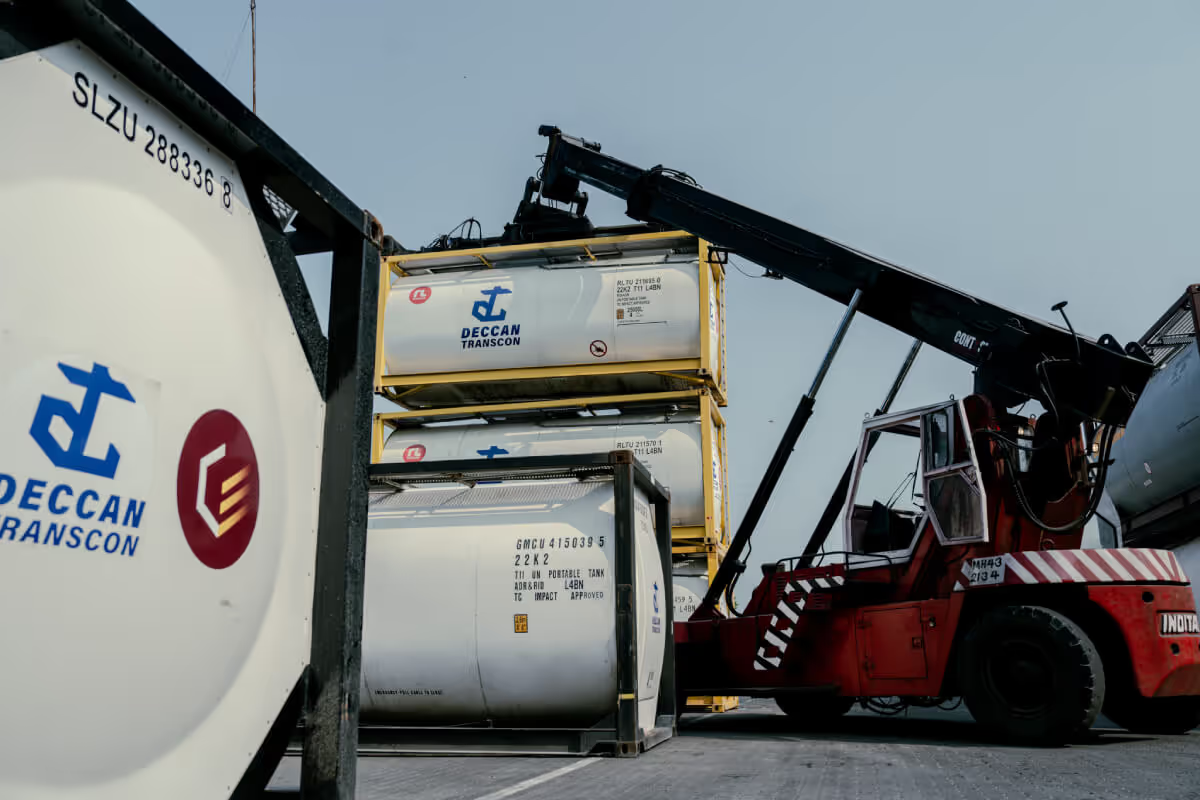
If you move bulk liquids internationally, the type of ISO tank you choose has direct implications for product integrity, regulatory compliance, and liability exposure. Yet, in practice, the distinction between food-grade ISO tanks and chemical-grade ISO tanks is often blurred, misunderstood, or handled informally.
The ISO tank container market was valued at approximately USD 1.82 billion in 2024 and is projected to grow at a CAGR of around 9.7% through 2033, driven by rising demand for bulk liquid transport across chemicals, food and beverage, and pharmaceuticals. Within that growth, food-grade cargo already accounts for roughly 18–25% of total ISO tank container usage globally. With volumes climbing, getting the classification right matters more than ever.
Here is a clear breakdown of what separates the two tank types, and why shippers need to pay close attention.
What Is an ISO Tank, and Why Does Classification Matter?
An ISO tank container is a stainless steel pressure vessel enclosed within a standard 20-foot ISO frame, designed for the intermodal transport of bulk liquids by sea, road, and rail. Standard capacity ranges between 21,000 and 26,000 litres, though extended-frame (swap body) variants can go up to 35,000 litres.
The classification of a tank, whether it qualifies as food-grade or chemical-grade, is determined by what it carries as well as how it was built, lined, cleaned, inspected, and documented. Putting edible oil into a tank previously used for industrial solvents, without proper re-certification in many jurisdictions, is a violation that can result in cargo rejection, regulatory penalties, or worse.
Food-Grade ISO Tanks: What Sets Them Apart
A food-grade ISO tank container is purpose-built or formally certified to carry consumables like edible oils, wine, fruit juices, liquid sugar, dairy products, non-hazardous food additives, and similar cargo.
Construction and material standards:
- Inner shell made exclusively from 316L stainless steel, which offers superior resistance to organic acids and flavour contamination.
- Interior surfaces are polished to a Ra (roughness average) of typically 0.8 microns or below. which is smooth enough to prevent microbial adhesion and facilitate complete drainage.
- No lining or coating on interior surfaces; bare, smooth steel is the industry standard for direct food contact.
- Fittings, valves, and gaskets must be food-safe certified (usually FDA or EU food-contact compliant materials like PTFE or EPDM).
Regulatory and certification requirements:
- Must comply with applicable food safety standards. In India, FSSAI; internationally, Codex Alimentarius guidelines and destination-country regulations apply.
- Cleaning and pre-loading inspections are far more stringent, including ATP (Adenosine Triphosphate) testing in some cases to verify microbial cleanliness.
- A valid cleaning certificate and pre-trip inspection (PTI) report specific to food service are typically required before each loading.
Prior cargo restrictions are perhaps the most operationally significant factor. Food-grade tank containers must maintain a clean prior cargo history, meaning the last several cargoes must have been food-safe or approved wash cargoes. Any history of hazardous chemical carriage effectively disqualifies a tank from food service, at least until a full re-certification process is completed.
Chemical ISO Tanks: Built for a Different Kind of Demand
Chemical ISO tank specifications are defined primarily by the nature of the cargo: hazardous or non-hazardous liquid chemicals, petrochemicals, industrial solvents, acids, resins, and similar industrial liquids.
The IMO/UN categorisation system is central here. Chemical ISO tanks are classified by T-codes (T1 through T22), where a higher T-code indicates a higher level of pressure resistance and structural reinforcement required for more dangerous cargo.
Key construction differences:
- Material is typically 304 or 316 stainless steel, depending on the chemical compatibility required/
- Many chemical ISO tanks carry internal linings like rubber, epoxy, or other coatings to protect the shell from corrosive cargo; these same linings would be unacceptable for food contact.
- Pressure ratings are higher. Chemical tanks are designed for cargo requiring pressurised containment or elevated temperature management during transit.
- Dedicated valves, heating coils, and venting systems are common for viscous or temperature-sensitive industrial chemicals.
Regulatory framework:
- Transport governed by IMDG Code (sea), ADR (road in Europe), RID (rail), and other modal regulations for hazardous materials.
- Each shipment typically requires a Dangerous Goods Declaration, and tank certification must match the UN number of the cargo being carried.
- Tanks are subject to 2.5-year and 5-year periodic inspection cycles by approved inspection bodies.
Approximately 61% of ISO tank containers globally are deployed in chemical logistics. The chemical industry's demand for reliable, compliant bulk liquid ISO tank containers remains the backbone of the sector.
Food vs Chemical ISO Tanks: The Practical Differences at a Glance
Cleaning and Cross-Contamination: A Bigger Issue Than Most Shippers Realise
The cleaning regime between ISO tank types for liquid transport is where many shippers underestimate the risk. Transitioning a tank from chemical to food service involves:
- Multiple hot water and steam rinse cycles.
- Solvent and alkaline cleaning sequences depending on prior cargo.
- Independent inspection and residue testing.
- Formal documentation and, in some cases, re-classification by the tank operator.
The global tank container cleaning and depot infrastructure is concentrated, and not all depots are equipped for food-grade washing. Shippers who assume a ‘cleaned’ tank is automatically food-safe may find their cargo rejected at destination ports, particularly in the EU, US, or Japan, where food import controls are tightly enforced.
Cross-contamination events are not theoretical. They have resulted in full cargo rejections, disputes over liability, and supply chain disruptions that took weeks to resolve. When shipping edible products, the tank's full documentation trail is what port inspectors and buyers' auditors look for.
What Shippers Should Ask Before Booking
For exporters working with ISO tank operators in India, the documentation requirements at the origin are cleaning certificates, PTI reports, and prior cargo history. They carry the same weight as they do at destination ports in the EU, US, or Japan. Whether you're moving liquid food products or industrial chemicals, these are the questions worth asking your logistics provider before confirming a tank:
For food-grade shipments:
- What are the last three cargoes carried in this tank?
- Is a valid cleaning certificate and PTI available?
- Are the gaskets and fittings food-contact certified?
- Is the destination country's food import standard addressed in the documentation?
For chemical shipments:
- Does the tank's T-code match the UN number of the cargo?
- Are heating or cooling systems required, and are they functional?
- Has the tank passed its current periodic inspection?
- Are any lining assessments required, given the cargo type?
A Note on Dedicated vs. Flexitank Alternatives
Some shippers moving food-grade cargo in smaller volumes consider flexitank liners placed inside dry containers as a workaround. While flexitanks have their place, they come with meaningful limitations: a single-use format, reduced pressure and temperature tolerance, and tighter cargo compatibility restrictions. They are particularly for non-hazardous, lower-value food liquids at lower price points.
For volume shippers and those moving regulated or high-value food or chemical liquids across international corridors, a properly certified, dedicated bulk liquid ISO tank container remains the operationally sound and commercially defensible option.
Final Word
The difference between food-grade ISO tanks and chemical-grade ISO tanks goes well beyond labels. It runs through the material specification, the regulatory paperwork, the cleaning history, and the operator's documentation standards. Treating the two as interchangeable can expose shippers to cargo loss, regulatory action, and commercial disputes, even for a single shipment.
With the global ISO tank fleet crossing 848,000 units in 2024 and food-grade demand growing year on year, the available supply of properly certified tanks has improved. But availability alone doesn't guarantee compliance. Working with a logistics partner who understands the technical and regulatory distinctions and can document them is what separates a smooth shipment from a costly one.
At Deccan Transcon, we work with shippers across food, chemical, and industrial sectors to match the right ISO tank type to the right cargo, route, and regulatory requirement. If you'd like to understand which tank specification fits your next shipment, reach out to our team.
FAQs
1. Can a chemical ISO tank be converted to food-grade service?
Technically, yes, but it requires complete stripping, re-certification, extensive cleaning, and independent inspection. Even then, buyers and regulators may reject tanks with a hazardous chemical history. Most operators maintain dedicated food-grade fleets instead.
2. How to verify that an ISO tank is genuinely food-grade certified?
Request the construction certificate (confirming 316L steel and mirror-polished interiors), a valid cleaning certificate from an accredited depot, a PTI report, and prior cargo declarations for the last three loads. Missing or incomplete documentation is a red flag.
3. What happens if a food cargo arrives in a tank that wasn't properly certified?
Destination authorities can reject the shipment outright. You'll face re-export or disposal costs, potential regulatory penalties, damaged buyer relationships, and liability disputes with your logistics provider.
4. Are heating coils in ISO tanks safe for food products?
Yes, if the coil material, gaskets, and heat transfer medium are food-contact certified and documented. Some food-grade tanks use steam or hot water systems for temperature-sensitive cargo like edible oils or liquid sugars.
5. Do I need a different type of ISO tank for organic or kosher-certified food products?
The tank doesn't need separate certification, but cleaning and prior cargo standards are stricter. Kosher shipments typically require rabbinical supervision and depot certification. Organic cargo requires proof that no prohibited substances were previously carried. Always confirm your buyer's specific requirements before booking.
Sources:
- ISO tank container market valued at USD 1.82 billion in 2024, projected CAGR of 9.7% through 2033
- Food-grade cargo accounts for approximately 18% of total ISO tank container usage globally (2023)
- The chemicals segment accounts for approximately 43.7–44.55% of the ISO tank container market by application
- ~61% of ISO tank containers are deployed in chemical logistics
- Global ISO tank fleet reached approximately 848,400 units by January 1, 2024