


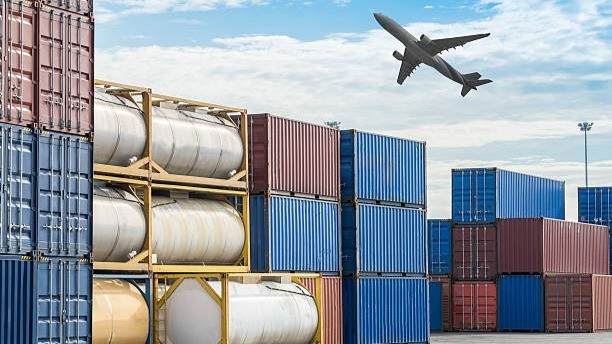
Every shipper has faced this moment: a delivery window is closing, a client is waiting, and you have to decide fast. Do you pay a premium for air, or do you stay the course with sea freight and manage the fallout?
It is not always a straightforward call. The difference between air freight and sea freight goes beyond price and transit time. It involves the nature of your cargo, your customer commitments, your supply chain buffer, and, in many cases, the regulatory environment around what you are moving.
At Deccan Transcon, we work closely with shippers handling bulk liquids, chemicals, and industrial cargo across international lanes. As a provider of freight forwarding services in India, the question of international shipping by air vs sea comes up constantly, and the answer is rarely one-size-fits-all. Here is a practical breakdown to help you make better shipping decisions.
Air Cargo Vs Sea Cargo Shipping Time: The Numbers First
Let us start with what most people look at first.
Air freight typically costs 4 to 5 times more per kilogram than ocean freight, and for heavy or volumetric cargo, that gap can stretch even wider. According to the International Air Transport Association (IATA), air cargo accounts for around 35% of global trade by value but only about 1% by volume. That statistic says a lot about what kind of cargo actually moves by air.
Sea freight, on the other hand, handles over 80% of global trade by volume (UNCTAD, 2023). It remains the backbone of international shipping for a reason: the cost per unit is dramatically lower, especially for full container loads (FCL) and bulk shipments.
Air cargo vs sea cargo shipping time (approximate):
- Air freight: 1 to 5 days, depending on origin-destination and customs clearance
- Sea freight: 15 to 45+ days, depending on the trade lane and routing
If your cargo weighs under 100 kg and has a high value-to-weight ratio, air can make sense economically. If you are moving tankers of liquid chemical cargo or large industrial batches, sea freight is almost always the smarter financial choice.
When Air Freight Makes Sense
Speed is the obvious reason, but the real question is whether that speed translates into business value.
Air freight is worth considering when:
- The cargo has a short shelf life or is time-sensitive by nature (pharmaceutical raw materials, perishables, certain specialty chemicals)
- A stockout or production delay at the destination would cost significantly more than the freight premium
- You are shipping small, high-value consignments where freight cost is a minor percentage of cargo value
- An emergency replenishment is needed, and there is no buffer inventory in place
- Regulatory or tender deadlines cannot be missed
For instance, a manufacturer sourcing a critical additive that keeps a production line running may find that a $15,000 air freight bill is far cheaper than a week of line downtime. In that context, speed absolutely justifies the cost.
When Sea Freight Is the Smarter Bet
For bulk liquids, industrial chemicals, and large-volume cargo, sea freight is not just cheaper. It is often the only practical option.
Sea freight holds the advantage when:
- You are shipping large quantities where air freight would be cost-prohibitive, regardless of urgency
- The cargo is classified as dangerous goods or hazardous materials (many liquid chemicals face strict air transport restrictions under IATA DGR regulations)
- Lead times allow for standard ocean transit
- Packaging and handling requirements are better suited to ISO tank containers or flexitanks
- Your supply chain operates on planned procurement cycles with adequate inventory buffers
Bulk liquid cargo, in particular, is heavily constrained in air. Many chemicals, solvents, and petroleum-based products are either restricted or outright prohibited in air freight. Trying to move them by air is not just expensive; in many cases, it is simply not permitted.
When you plan procurement properly, sea freight also gives you more control over documentation, customs clearance, and cargo tracking across the journey.
The Hidden Costs of Air Freight
The headline rate is never the whole story.
When shippers compare air freight vs sea freight costs, they often look at the base rate and stop there. But air freight comes with accessorial charges that add up quickly: fuel surcharges, security surcharges, screening fees, handling fees at origin and destination, and expedited customs brokerage. On international shipments, these can add 30 to 50% on top of the base air rate.
Sea freight has its own additional charges, including port fees, documentation charges, and, in some cases, demurrage and detention. But these are generally more predictable and, spread across larger cargo volumes, have far less impact per unit.
The takeaway: always calculate the all-in cost per unit or per kilogram before making a modal decision.
Air Freight vs Sea Freight Cost Comparison
Before getting into when to choose air freight vs ocean freight, here is a direct breakdown across the factors that matter most to bulk shippers.
The Case for Planning Over Urgency
In reality, many air freight decisions happen reactively instead of being part of a clear strategy.
When shippers find themselves choosing air freight repeatedly on the same lanes or cargo types, it is usually a signal of a supply chain planning gap rather than a genuine need for speed. Consistent reliance on air freight for cargo that could move by sea often points to issues in inventory planning, supplier lead times, or demand forecasting.
The best shipping method for international freight is the one that fits your cargo, your timeline, and your cost structure. In most B2B scenarios involving bulk cargo, building in the planning horizon to use sea freight is both a financially and operationally sound choice.
When to Choose Air Freight vs Ocean Freight: Questions to Ask First
Before defaulting to air, run through these questions:
- Can the delivery timeline accommodate sea freight if we adjust the order cycle?
- Is the cargo eligible for air transport under IATA DGR or local regulations?
- What is the true cost of delay at the destination?
- Does the value-to-weight ratio of the cargo make air commercially viable?
- Is this an exception shipment or a pattern that needs a structural fix?
FAQs
1. What is the main difference between air freight and sea freight for industrial cargo?
The primary differences are cost, transit time, and cargo eligibility. Air freight offers speed at a significantly higher cost but is not suitable for most bulk liquids or hazardous materials. Sea freight is far more cost-effective for large volumes and accommodates a wider range of cargo types, including liquid chemicals in ISO tanks or flexitanks.
2. When does it make financial sense to choose air freight over ocean freight?
Air freight is financially justifiable when the cost of delay exceeds the freight premium, or when the cargo has a high value-to-weight ratio and small volume. For bulk shippers, this scenario is less common. It applies most often to emergency replenishments, time-critical materials, or high-value specialty goods.
3. Can bulk liquids and chemicals be shipped by air?
Many liquid chemicals are restricted or prohibited under the IATA Dangerous Goods Regulations. Even where air transport is technically permitted, the weight and volume of bulk liquid cargo make air shipping cost-prohibitive. Sea freight via ISO tank containers or flexitanks is the standard and preferred mode for this cargo type.
4. How to calculate whether air or sea freight is more cost-effective for my shipment?
Start with the all-in freight cost per kilogram or per unit, not just the base rate. Factor in surcharges, handling, and customs costs for both modes. Then weigh that against the business cost of the transit time difference. If the delay cost for sea freight is lower than the premium for air, sea is the better option.
5. How does Deccan Transcon help shippers decide between air and sea freight?
Deccan Transcon is an international freight forwarding company in India working with shippers to evaluate cargo type, regulatory requirements, timeline, and cost before recommending a freight mode. For bulk liquid and chemical shipments, we provide end-to-end sea freight solutions with the documentation, compliance support, and carrier relationships needed to keep cargo moving efficiently.
Sources & References:
1. Air cargo accounts for ~35% of global trade by value but less than 1% by volume (IATA)
2. Sea freight handles over 80% of global trade by volume (UNCTAD)